


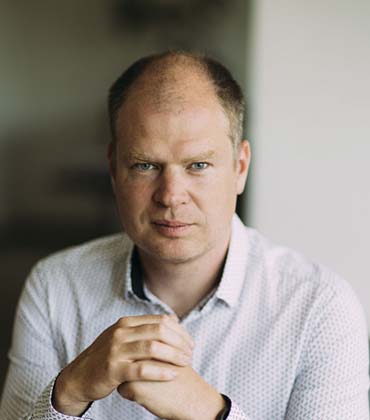
Lukas Nemcik
Lukas Nemcik is the Vice-Chairman and Board of Directors at Skupina COOP, where he has been a driving force since 2011. With a keen focus on innovations, new technologies and foreign trade, Lukas has led significant advancements within the COOP Group. His notable achievements include launching e-commerce services, introducing the first refrigerated food delivery box and implementing AI in stores. Lukas also pioneered the creation of Europe’s first automated 24/7 store, positioning Skupina COOP at the forefront of retail innovation.
Through this article, Lukas discusses the unique structure and community-oriented focus of Czech and Moravian consumer cooperatives, which operate over 2,400 stores across the Czech Republic. Lukas highlights the cooperative’s commitment to supporting local communities through initiatives like small instore cafés and innovative solutions such as the development of automated 24/7 stores. He also explores the challenges and successes in implementing these technologies, emphasising the importance of sustainable practices, community engagement and collaboration with technology partners.
Czech and Moravian consumer cooperatives, which operate under the COOP name, have a tradition of over 170 years in the Czech Republic. Forty consumer cooperatives operate about 2,400 stores nationwide and are owned by 100,000 Czech citizens. They are rooted in regions and each cooperative focuses on a different area. Above all, there is a central organisation where I work.
Thanks to this structure, cooperatives are oriented toward the regions where they operate. They support small regional producers, municipalities and employment and the focus is on social solid basics, which differentiates them from other business retailers. If you work in an organisation like that, you must work differently. Cooperatives are more like a family, where you work with people for a long time and communication is more direct.
We also reflect these in our marketing. Some time ago, for example, we started a campaign where we highlighted that we know our customers better. So, the visual part showed typical customers and we said—for someone, Mrs. Novakova, for us: Marketa. We wanted to show that we know most of our customers as they come to our stores very often. That is very important and is rooted in our communication strategy.
By creating automated 24/7 stores, we're not just preserving small shops in rural areas—we're ensuring they remain a vital part of the community, offering convenience and sustainability through innovative technology.
Based on that, we do a lot of things consumer-oriented. We started a project of small cafés inside the stores so people can sit and talk even in small villages where nothing else is around. It is quite important to build community and get all the services they need, like financial services—cashback, payment of slips or top-up mobile phones.
All these topics lead to building an e-commerce platform where people can shop online and pick up a purchase at their stores. Customers can purchase products already in the store and products from the central warehouse. That turns even a small store into a virtual hypermarket. The problem was the pickup time. We didn’t want to use home delivery as not being a sustainable option. Therefore, we created the first refrigerated box for food products, where you can pick up your purchase 24/7. Unfortunately, these boxes turned out to be a rather expensive option.
After a few years of searching and trying, we found a solution: automated 24/7 stores that people can get to know from AMAZON GO or ZABKA NANO. But… All these concepts have limitations—they are expensive, targeted for bigger cities and the stores are built for technology, not the opposite way, so using them in the current stores seems problematic. Also, we focused on the work with employees we would like to have in the stores for at least part of the day.
So, at least in Europe, we created our first 24/7 automated stores. We didn’t know what to expect and we learn as we go. Our goal was to invent a technology that was so cheap that we could use it in every store. This happened thanks to our technology partners from Contio/ Knowinstore, who developed it. The second goal was to have employees in the stores during the day, mainly since older customers were used to having a service desk available. The last goal was to find the possibility of verifying the age as we wanted to sell a complete assortment, even with alcohol. This happened using Czech Bank ID, which lets us know who goes in and out of the store. This was made possible based on the cooperation of many partners from the bank sector, like ČSOB bank or Mastercard Czech.
In automated mode, the customer comes to the store with the phone and downloads the app, which connects to his Bank ID. Then, he shows the app's QR code to the scanner at the entrance and shops inside. At the end, he approaches the automated cashier, showing the QR code and paying by card. Then, he left the store again using the QR code— security cameras constantly watched him with AI. If something happens like theft or a medical situation, the security desk is alerted and can communicate with the customer inside or call for help.
This system is prevalent as it is now in 50 stores nationwide, from the smallest one with 50 m2 to the biggest with 600 m2. Customers appreciate that they don’t have to travel to the larger stores or carry their shopping bags by bus back home. Even though we must still learn how to work with various operations in the stores, it shows how to keep the small stores in rural areas running. We also started to operate these stores with the support from local municipalities in the franchise system. We all have a common goal— sustainable countryside where you employ, produce, sell and buy.
