

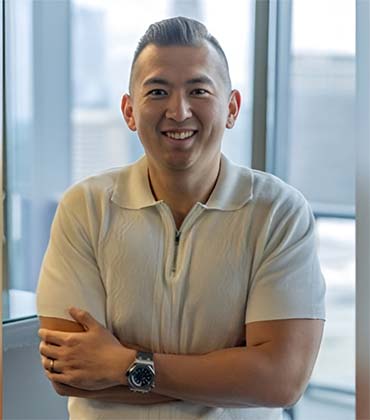
Andy Wu
The Leadership Lessons that Last
I’ve been fortunate to build my career across acquisitions, investing, operations and business development, and each experience has reinforced the same lesson: real estate is ultimately a people business. Early in my career, I spent years underwriting investments and helping acquire thousands of single-family homes and development opportunities, where every decision came down to balancing risk and reward. As my career evolved into operations and business development, I realized that buying a great asset is only the beginning; long-term value is created through disciplined execution and strong partnerships.
One lesson I’ve come to appreciate is the importance of finding the right company, the right culture, and the right leaders. I’ve been lucky to work alongside people who were willing to invest in me, challenge me, and give me opportunities to grow. Those experiences have shaped how I approach leadership today. I try to stay curious, make decisions based on data instead of emotion, and never lose sight of the fact that trust and credibility are earned over years, not in a single transaction.
The Value of Being a Trusted Resource
I’ve always believed that if you genuinely focus on helping people solve problems, the business will eventually follow. Real estate is a relationship-driven industry, and many of the people I work with today are individuals I’ve known for years. I never approach a conversation looking for the next transaction, I try to understand what someone is trying to accomplish and whether I can help them get there.
One thing that’s always been important to me is being someone people feel comfortable calling, whether they’re a client or not. If someone has a question about underwriting, wants a second opinion on a deal, needs an introduction, or there’s any other way I can help, I’m happy to do it. Most of the time, there’s nothing in it for me, and that’s okay.
Business development isn’t just about creating opportunities for your company, it’s about becoming a trusted resource that people know they can rely on.
I’ve found that when you’re willing to share knowledge, make connections and genuinely help others succeed, those relationships naturally become stronger over time. Business development isn’t just about creating opportunities for your company, it’s about becoming a trusted resource that people know they can rely on. The business tends to take care of itself when you’ve built that kind of trust.
The Discipline behind Consistent Execution
I think the SFR/BTR industry will continue to mature, and with that comes a greater focus on operational excellence. Build-to-Rent (BTR) has evolved from a niche asset class into a core institutional investment strategy, and I believe we’ll continue to see significant growth as more developers and investors enter the space.
Going forward, the differentiator won’t simply be who can acquire the most communities or raise the most capital, it will be who can consistently execute. That means delivering a great resident experience, leveraging technology to improve efficiency, and operating portfolios with discipline. Leaders who understand both the investment side and the operational side of the business will be the ones who create the most longterm value.
I’ve been fortunate to work alongside leaders like Lance Popp, Andy Capps and Jay Byce, and they’ve had a tremendous influence on how I approach leadership. One thing they all have in common is that they lead by example. They never ask their teams to do something they’re not willing to do themselves, and that creates trust, accountability, and a culture where people want to perform.
I’ve also learned that speed matters. In real estate, you’re rarely going to have perfect information, so being able to make thoughtful decisions quickly and keep moving is often more valuable than waiting for the perfect answer. If you combine that mindset with clear communication, accountability, and a team that’s aligned around a common goal, you create an environment where people can consistently execute at a high level.
The Foundations of a Successful Career
The biggest piece of advice I’d give is to find a great mentor early in your career. The person you work for is often more important than the title you have. Find the right company, the right culture, and a leader who is willing to invest in you, challenge you, and teach you the business from the ground up. I was fortunate to learn from leaders who trusted me with responsibility and took the time to explain not just what decisions were being made, but why they were being made.
I’d also encourage people to learn the fundamentals of real estate investing. Understand how deals are underwritten, how developments are executed, and how value is created over the life of an investment. Even if your role is in business development, having that knowledge allows you to have more meaningful conversations and become a trusted advisor instead of simply a salesperson.
Finally, protect your reputation. Real estate is a surprisingly small industry, and over time, your integrity, work ethic, and the way you treat people will open more doors than any resume ever will.
