

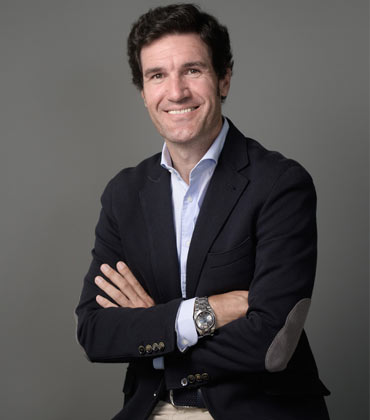
Ignacio de Loyola Quereda Garcia
The world changes, life changes, companies change, and everything is at breakneck speed, affecting people personally as well as at work.
In today's dynamic business landscape, the ability to adapt and transform has become a crucial factor for success. In this context, talent management emerges as a fundamental tool to promote organizational change, allowing companies to fluidly navigate the challenges and opportunities that arise.
As for any company, changes in the business, projects, legislation, and applicable regulations are critical. Still, these types of changes may be unpredictable or inevitable, and they may not come from corporate decisions. When facing these situations, the only thing we can do is adapt in the best possible way. In the best conditions so that our people (employees) are not affected and, to the extent possible, obtain or perceive an improvement associated with the change, that should be the first principle for a company to correctly manage change.
However, there is another series of changes, which we can classify as productive or organizational, which are a consequence of corporate decisions. For example, growth is led by new customer needs, service relocation is looking for efficiencies, changes in the company business model, new technologies impact management models, etc. This is our scope of action, where we can plan how it is executed and how we are going to manage it; this is the type of change where an HR team must align with the organization and business areas to achieve the best results.
We may think that an organizational change only affects the business, but it also has a direct impact on people, their skills, their capabilities and their preparation for the new challenges they will have to face. This is where HR acts, first you must make an assessment on how are your people, their preferences, their capabilities, and also we aware of the weaknesses; only with this information, we can execute a good adaptation plan, which is the first step to excel on the talent management.
People are reluctant to change, we have insecurities and fears, not knowing where these come from, as result it is always easier to react saying ‘no’ at first, which is why people find it difficult to accept a change at first.
What is Talent Management?
When we talk about plan, change management and talent, we do so thinking about helping our people to be better professionals, using technical training for each job, technological training of new tools, training to improve their communication skills ‘Manage people and manage talent.’
Talent management and organizational change must understand the internal factors that motivate each person to improve and join a project; if this confluence of interests is met, a successful and easy global process can be achieved without people feeling left aside. By doing so, the entire company personnel will be focused on a common goal where their personal and professional expectations are met.
How does Talent Management impact Organizational Change?
If a company or a department wants to achieve success, it must combine both processes:
● Align talent with strategy.
● Foster a culture of change.
● Motivate and involve people.
● Manage performance and rewards.
● Mitigate resistance to change.
In my experience, I have seen situations that range from a small change (the department that incorporates new tools or changes its processes) to a large change (the company that separates its business lines or relocates resources abroad) have a point in common: people and talent. This is the reason why the management of a company and HR departments must be prepared for any change, encourage a good communication policy and go by the hand of its people during the process. If we achieve the critical milestone of people being self-confident and engaged, part of the process of success will be achieved.
In certain roles, most people do not look for a change, nor do they expect it; they prefer security and continuity, and they believe that any change could be problematic; this is where HR departments and business areas must mean a good communication plan, a good change management be able to accompany it’s people in the process. If we detect knowledge gaps, we will implement training actions; if we detect conflict and lack of motivation, we will act to take care of people, solve problems and guide them toward the success of the project.
‘People are reluctant to change. We have insecurities and fears, not knowing where these come from. As a result, it is always easier to react by saying ‘no’ at first, which is why people find it difficult to accept a change at first.’
Human talent, organizational change and the behavior of each person within companies is something that is not self-managed, it is necessary to involve all levels of the company and to do so have a well-defined roadmap where each person knows what the process will be like will be the key.
Some examples and tools that can help in this change process are:
● Training and development programs.
● Mentoring and Coaching.
● Open, transparent and constant communication.
Nowadays, people not only choose a company for the contractual conditions (salary and benefits), the project, the career plan and the corporate culture are essential, if we want to retain and attract talent we must be attractive, guarantee and secure a project solid, and most importantly in such a competitive world, motivate and reach the heart of each person.
In addition to all this, to manage any change and achieve good results, there is a determining factor: knowing people. From the HR departments we must deep down on what our employees want, what problems they encounter and how we can solve them. If we do this well, we can build a good strategy and ensure the future of our organization.
Changes are always good, but they cannot be made without the right people, which is why organization and talent must be linked to our strategic plan.
