

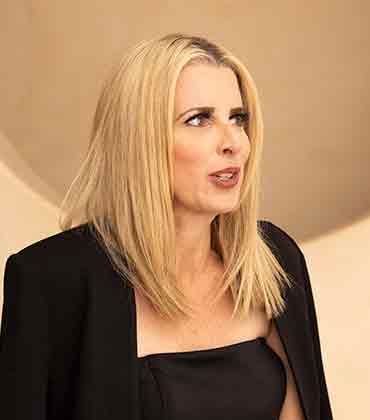
Lauren Henss
AI, changing customer expectations, evolving industry landscapes, and faster business cycles have changed what business leadership looks like. Today's executives need to be able to connect strategy, technology, operations, customer experience, and people to drive measurable business outcomes.
I describe today's leaders as "Swiss Army Knives." You need to be the executive who connects brand to business transformation and growth. Not merely someone who knows brand. Not someone who just knows AI. They clearly understand how brand + product + technology + AI + customer experience and commercial strategy work together. They have product/go-to-market/product-market fit fluency within SaaS, and brand, communications, and commercial impact with marketing audiences. Executives who are the most valuable are the ones who can bring multiple disciplines together to solve business problems.
As a growth catalyst and marketer, I've learned that if you want to earn a seat at the executive table, you have to think as a cross-functional business operator first.
The era of leaders being confined to a box is over.
My career has taken me through real estate, PropTech, SaaS, and luxury consumer brands; from late-stage startups to Fortune 500 companies. One of the biggest lessons I have learned is that functional expertise may get you hired, but a growth mindset is what earns influence and helps you get ahead. How are you connecting the dots throughout the organization to propel the company's growth and expansion one year from now, or five years from now?
According to Deloitte's Global Marketing Trends research, CMOs are increasingly expected to drive enterprise growth, innovation, customer strategy, and business transformation rather than simply awareness.
Growth can’t be measured by impressions or campaign performance alone. It's measured by recruitment, retention, technology adoption, productivity, market share, customer experience, and ultimately revenue and profitability.
Start With the Outcomes
One of the biggest leadership mistakes I see today is the failure to articulate why. Organizations are quick to jump straight into execution. What is your ultimate goal?
But every initiative or campaign should begin with identifying the outcome you are trying to create.
Once everyone understands the desired outcome, teams become more aligned, and innovation accelerates because people are working together to solve problems, not just checking tasks off a to-do list.
Whether I'm launching a technology platform, leading a strategic partnership, or building a marketing campaign, I always start there. The "why" drives every decision that follows, including the what and the how.
Balancing Brand Growth with Evolving Market Demands
The strongest brands are built on two principles that seem contradictory but are equally important: consistency and adaptability.
Markets change. Consumer expectations evolve. Technology advances. Competitive landscapes shift. But a brand's purpose and positioning should remain consistent to build trust over time.
At FirstTeam®, we stay grounded in our core values and agent-first philosophy while continuously evaluating what our agents and consumers need to succeed in today's market.
Equally important, every marketing decision must connect back to business outcomes. Impressions, clicks, and engagement matter only if they contribute to meaningful results. Recruitment, retention, adoption, productivity, market share, and revenue are ultimately the metrics that define success.
Brand and performance are not competing priorities. The strongest brands generate the strongest business results. Research from McKinsey has shown that companies that invest in both long-term brand building and short-term performance marketing consistently outperform those focused on only one.
An effective marketing leader should be a brand builder and a business operator. Creativity remains essential, but it must be paired with strategic thinking, operational discipline, and a clear understanding of how marketing creates enterprise value.
That mindset helped shape our strategic marketing partnership with Brown Harris Stevens. Together, we are connecting more than 5,000 agents across over 70 offices nationwide through collaborative marketing, public relations, advertising, networking, and shared market intelligence.
Fostering Innovation and Collaboration
Innovation thrives when people have both freedom and accountability. I encourage my team to challenge assumptions, experiment with new ideas, embrace emerging technologies, and continuously look for better ways to solve problems. At the same time, innovation without execution is simply an idea.
Marketing cannot operate in a vacuum. Some of our most successful initiatives are the result of close collaboration across executive leadership, operations, communications, technology, education, and our agents themselves.
When everyone understands the broader business objective, innovation becomes easier to implement and significantly more impactful.
Innovation should be embedded into everyday decision-making and become part of the culture. The most effective marketing organizations today are strategic growth teams that connect brand, technology, operations, and business strategy to drive measurable results.
Advice for Future Leaders
My biggest piece of advice to future leaders is simple: Don’t focus on becoming the best marketer. Focus on becoming a great business leader who happens to specialize in marketing. The role of the CMO has evolved dramatically over the last decade. Today's leaders are chief marketing & growth officers (CMGO) who understand growth strategy, customer experience, operations, technology, AI, analytics, organizational transformation, and revenue generation.
The leaders who will thrive in the future are those who develop broad business acumen while maintaining deep expertise in their craft. Learn finance, operations, and AI. Develop your communication skills. Always start with the desired outcome and work your way backwards.
Stay curious. Be adaptable. Take calculated risks. Volunteer for projects outside your comfort zone. Some of the most valuable opportunities in my career came from stepping into areas that weren't technically part of my job description.
Most importantly, build a reputation for solving business problems.
Organizations rarely promote people because they create great campaigns. They elevate leaders who create measurable business impact.
The professionals who thrive in the next decade won't be the ones who know the most about marketing. They'll be the ones who understand how marketing, technology, AI, operations, and strategy work together to create growth.
That's where the future of leadership is headed, and it's where the greatest opportunities will be found.
