


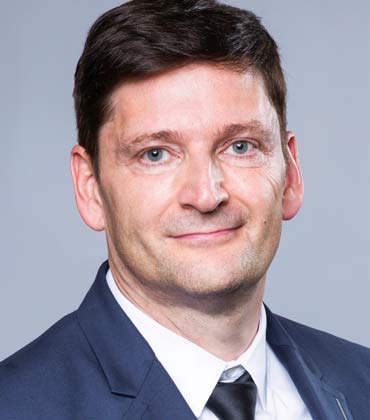
Jürgen Schneider
A quiet revolution in identifying diseases is making IP management in molecular diagnostics increasingly difficult – and, ironically,threatens to undermine our ambition to makereliable testing for human ailments easily accessible to all mankind. The COVID-19 pandemic has made polymerase chain reaction (PCR) a household term as a gold-standard test for the SARS-CoV-2 virus. But for about a dozen years, so-called syndromic PCR-testing has been on the march. Instead of testing for one pathogen at a time, syndromic testing looks for 50, 100 or even 250 pathogens in parallel in a sample to more quickly and surely identify the viral, bacterial or fungal causes of patients’ symptoms (or what doctors call “syndromes”).
Molecular testing is a young industry and patent protection abounds. When a so-called syndromic panel is ready for launch, IP expertshave to secure patents for its innovations and assess the company’s freedom to make and market the new product without infringing on other companies’ IP rights. Freedom to operate (FTO) analyses for single-pathogen kits forcean IP expert to wade through hundreds or thousands of patents approved and pending, and cost between $5,000 and $20,000. Multiplying that effort for50 to250 pathogens means FTO analyses for panels already cost up to $800,000, with the price tag rising rapidly.
The problem for molecular-diagnostics companies is that FTO expenditures are rising towards levels that could threaten their products’ commercial viability (and the profits to fund the development of the next innovation). And there is no way obvious was to escape a tyranny of numbers. Syndromic-testing panels covering new or more pathogens are likely to hit the market, while the number of patents to check against rises inexorably. From 2010 to 2019, the number ofallpatents in force worldwide jumped from less than 9 million to 15.2 million and patent applications from less than two million to 3.2 million every year.
“Advances in molecular testing are making patent protection and monitoring ever more difficult. Jürgen Schneider says its time for the sector to reach for new tools.”
Complicating this situation is the fact that patents at the molecular level are different from those on big, robust engineering products like car engines. Living materials made from DNA or RNA change continually – there were no SARS-CoV2 pathogens and no mutations two years ago. That means the products that interact with them have to change too, making FTO monitoring a recurring task. Patent documentation is full ofa willed linguistic fuzziness to help with this. Ambiguity is meant to make legal boundaries more flexible (and helps to keep competitors on their toes). Butterminology becomes less precise than it could be.
In research-heavy fields like blood diseases, these factorsconspire to force IP experts to wade through hundreds of thousands of patent permits and applications when conducting FTO assessments. There are hundreds of thousands of patents relating to viruses like HIV, hepatitis B or hepatitis C – and adjacent areas made relevant by linguistic fuzziness. (In less popular areas, say for specific orphan diseases or in genetic sequencing, IP experts probably only have to contend with a few thousand patents.) The bigger the syndromic-testing panel, the more time and money are necessary – and the harder any decision about IP risks.
The molecular-diagnostics industry is moving towards a point at which its IP experts will be overwhelmed by the amount of information they can reliably process. Arguably, the IP sector is lucky that the US limits the problem by banning patents on natural genetic material (although those for synthetic genetic material were allowed in 2013). The EU, for its part, differentiatesbetween essential and non-essential features and so also narrows the scope for court action: if a panel covers 250 pathogens and a single oneinfringes on the rights of one IP holder, so be it. But neither approach is a durable answer, as each one in effect keeps the FTO system running by curtailing or ignoring others’ intellectual-property rights.
The natural alternative to endless and expensive manpower andto fudging IP rights is automation. As a cousin to Google Books, Google Patents’ web crawlers have assembled an online trove of 11.9 million patent approvals and 6.5 million applications (since 2001) from the patent offices of 105 countries. But there is still no patent search-engine that can detect relevant similarities between a patent undergoing an FTO assessment and the tens, hundreds or thousands of others that might just curtail its freedom. An artificial intelligence-powered tool could be a huge help for IP – in diagnostics, pharma and beyond.
A useful first step would be a search engine that could flag relevant patents written in fuzzy as well as sharp language and deal with ever more complex search strategies. .It could use heuristic processes – practical approaches to problem solving, like rules of thumb or educated guesses – to filter out the most pertinent patents for human review. Current automation attempts are unreliable and patchy, and even a next-generation search engine would not be foolproof (although maybe ever less so). But it would open the way to reducing unmanageable human effort without sacrificing rigor – and perhaps one day slash IP-management costs to levels that spur innovationsquite simply uneconomical today.
