
Thank you for Subscribing to Business Management Review Weekly Brief


Company :
Management
Denis Machuel, CEO
![]()
Workforce Strategy Services Info
Q1
What Do Workforce Strategy Services Include?
Workforce Strategy Services help organisations connect business objectives with the skills, roles and people needed to achieve them. These services can include workforce planning, talent acquisition, employee training, internal mobility and support for organisational change. Rather than treating recruitment as an isolated activity, an effective strategy considers both immediate staffing needs and future capability requirements. Workforce Strategy Services also help decision-makers assess skills gaps, determine whether to hire or retrain and prepare employees for changes in technology, business priorities and working practices.
Q2
How Does The Adecco Group Approach Workforce Strategy Services?
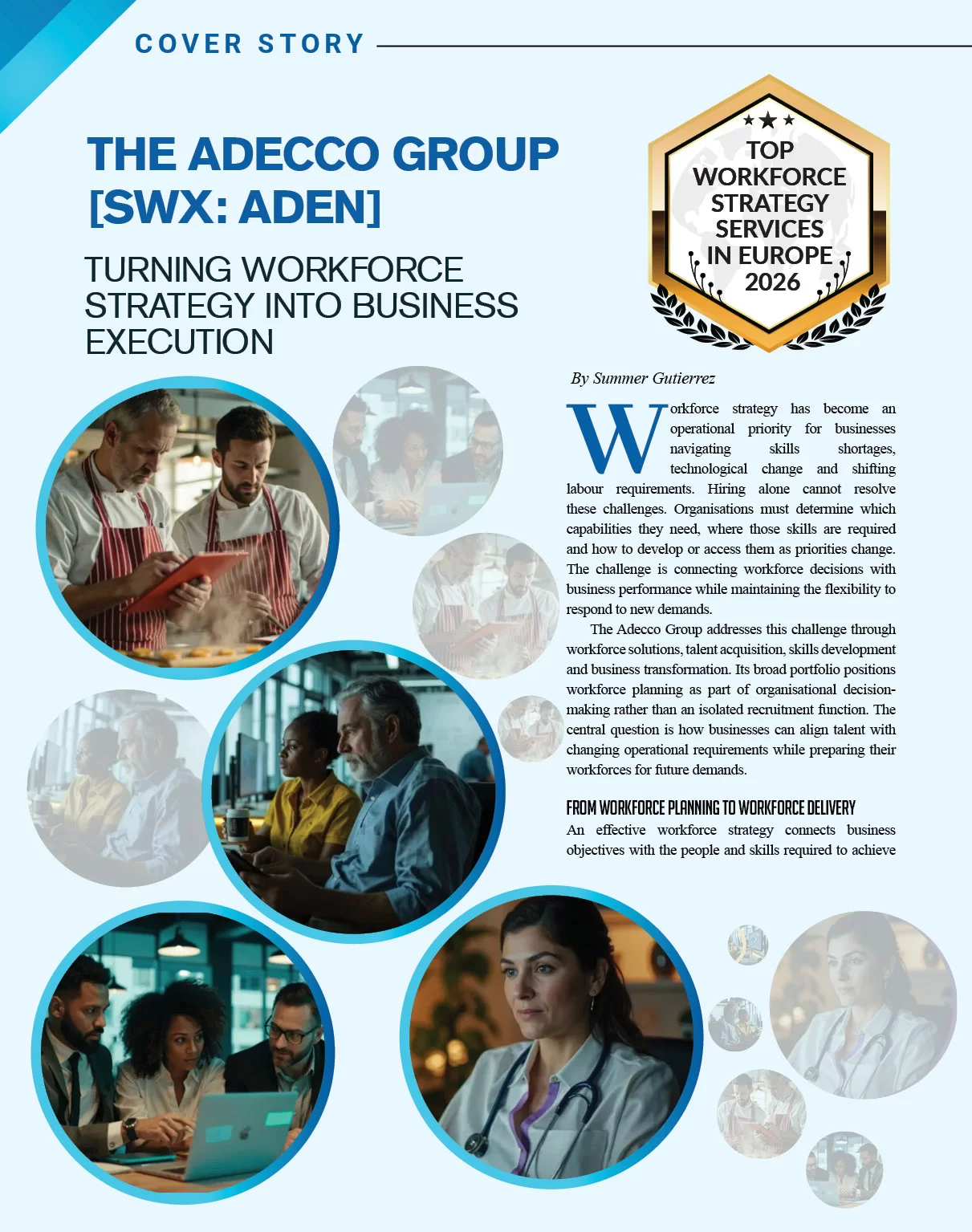
The Adecco Group brings together recruitment, technology expertise and talent development through three global business units: Adecco, Akkodis and LHH. Adecco focuses on workforce solutions and temporary and permanent recruitment, while Akkodis combines engineering, technology and talent services. LHH provides talent development, career transition and organisational change support. This structure enables The Adecco Group to address workforce requirements spanning recruitment, technical capabilities and employee development. Its approach illustrates how Workforce Strategy Services can connect different talent needs within a broader business plan.
Q3
How Can Workforce Planning Help Address Skills Gaps?
Workforce Strategy Services help organisations identify the capabilities they have, recognise shortages and anticipate future requirements. This assessment informs decisions about recruiting new employees, developing existing staff, redeploying talent or redesigning responsibilities. When a business adopts new technology, for example, it may need specialist skills while preparing current employees for changing roles. Planning these requirements early can help reduce mismatches between available talent and business priorities. The process also gives managers a clearer basis for allocating people and resources as demand and operating conditions change.
Q4
What Factors Matter When Evaluating Workforce Strategy Services?
A useful evaluation considers whether Workforce Strategy Services address current staffing pressures while supporting longer-term business objectives. Relevant factors include the ability to identify skills gaps, coordinate recruitment with training, support internal career moves and respond to changing job requirements. Technology can assist with candidate matching and workforce analysis, but human judgement remains important when assessing suitability and development needs. Organisations should also consider how workforce decisions affect employee experience, continuity and adaptability. The right approach depends on existing capabilities, future plans and the practical challenges facing the business.
Q5
How Do Workforce Strategy Services Support Organisational Change?
Workforce Strategy Services can help organisations prepare people for changes involving automation, new operating models or evolving skill requirements. This may involve recruiting specialists, retraining employees, adjusting responsibilities and providing career transition support. A coordinated plan helps decision-makers consider these needs together rather than managing each change separately. Workforce Strategy Services are particularly relevant when technology changes how work is performed, since successful implementation depends on both technical capabilities and employee readiness. Clear workforce planning can help organisations identify where human expertise remains essential and where new skills must be developed.
Q6
How Does The Adecco Group Connect Workforce Planning With Talent Development?
The Adecco Group combines workforce planning with recruitment, training, coaching and career transition services. Its international presence spans more than 60 countries, supporting organisations with requirements across different labour markets. The Group also serves more than 100,000 clients and reports approximately two million associates on assignment each day, including joint ventures. These documented capabilities illustrate how Workforce Strategy Services can extend beyond filling vacancies to address employee development and changing organisational needs. Coordinating these areas helps businesses consider how talent should be acquired, developed and supported as their priorities evolve.
Company :
The Adecco Group [SWX: ADEN]
ManagementDenis Machuel, CEO
Description
The Adecco Group is a global workforce solutions company that helps organisations recruit talent, develop employee skills and manage workforce transitions. Through its Adecco, Akkodis and LHH businesses, it supports recruitment, technology services, career development and organisational transformation across industries.
